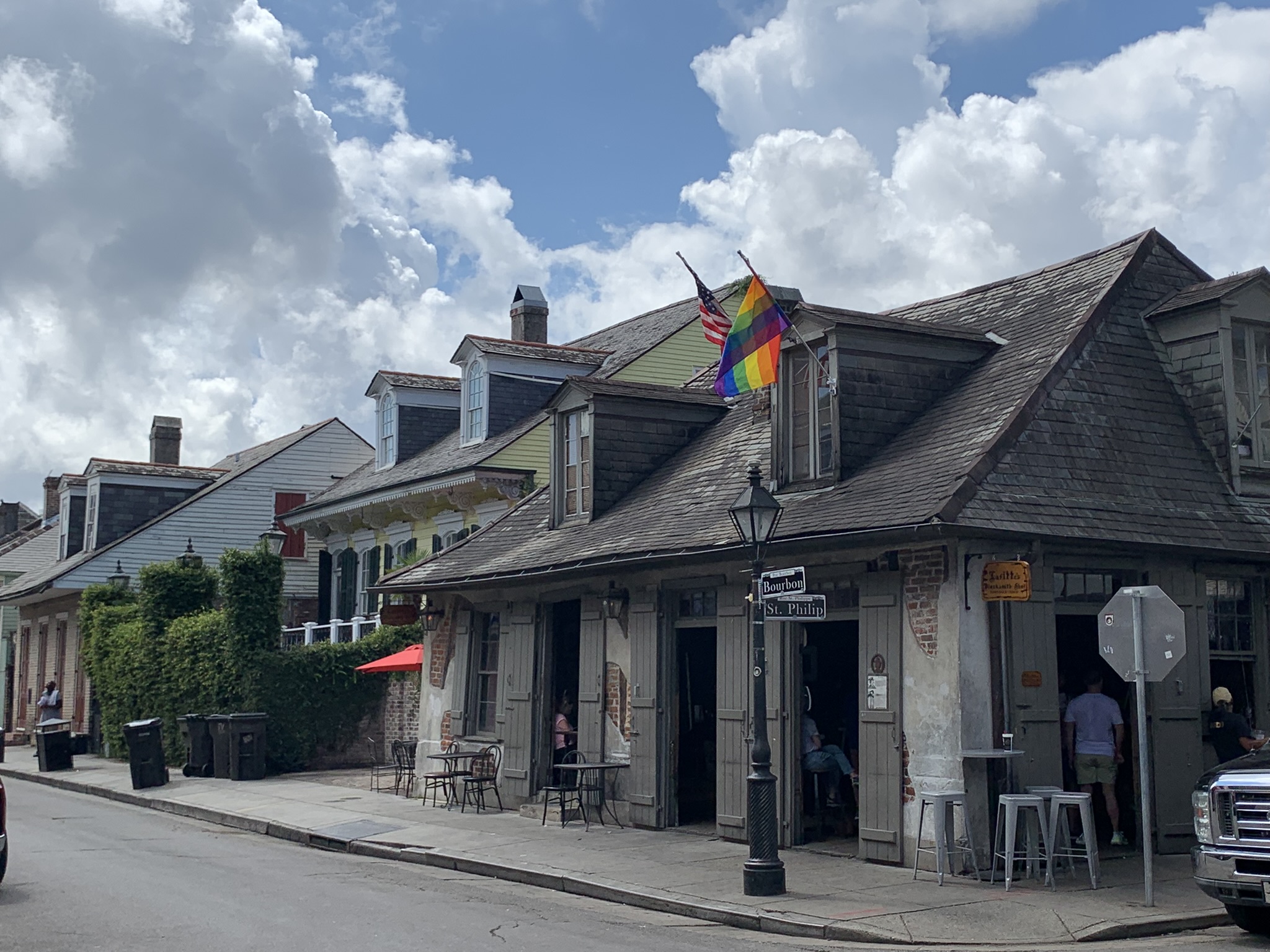
Not everyone will be familiar with all the references and musicians mentioned in “Beam Me Up.” For those who need it, I have compiled the following to help enrich your understanding of the lyrics and get to know a little more about New Orleans’ rich musical history—and those who created it—along the way.
Here are short bios of each of the musicians referenced in the song. I list each by the nicknames included in the song and added in a little about my personal connection, whatever that may be:
Art/Poppa Funk = Art Neville
1937 - 2018
Known to many as Poppa Funk, Art influenced the course of New Orleans music for more than six decades. At just 17 years old, he sang the carnival anthem “Mardi Gras Mambo” as a member of The Hawketts on their classic 1954 recording. In the 1950s and ‘60s he released several singles including “Cha Dooky Do,” “All These Things,” and “Lover of Love.” In the early 1960s Art formed the Neville Sounds with George Porter Jr., Leo Nocentelli, and Zigaboo Modeliste (and, for a short time, with Aaron and Cyril Neville). By the late ‘60s the band had changed its name to The Meters and went on to become one of the most influential funk bands of all time. Their musical canon includes songs like “Cissy Strut,” “Fire on the Bayou,” and “Just Kissed My Baby.” They recorded with many notable artists, including LaBelle (“Lady Marmalade”), Robert Palmer ("Sneaking Sally Through the Alley"), Paul McCartney, Dr. John ("Right Place Wrong Time"), and more. They were heralded by The Rolling Stones and have had a lasting impact on hip hop and jam bands. In 1978, Art joined with his brothers Charles, Aaron, and Cyril to form The Neville Brothers ("Hey Pocky Way," “Brother Blood,” “Fire and Brimstone”), having previously worked together backing up their uncle George “Big Chief Jolly” Landry on The Wild Tchoupitoulas album ("Meet De Boys on the Battlefront"). The Neville Brothers won a Grammy in 1989 and 1990, and Art received a Grammy Lifetime Achievement Award in 2018. His deep, resonant vocals and catchy keyboard work—especially on the B3 organ—are unmistakable. Read my previous blog post to learn my connection to Art and the seminal role he played in my life.
Charlie = Charles Neville
1938 - 2018
The second oldest of the Neville Brothers, Charles was known as ‘Charlie the Horn Man’ and brought a jazz inflection to the band’s sound. In fact, it was his soprano sax playing on the Nevilles’ song “Healing Chant” that helped win them a Grammy for best pop instrumental in 1990. In his early years, Charles worked with a number of blues and R&B acts, including Jimmy Reed, BB King, and Bobby ‘Blue’ Bland. After serving 3-1/2 years in the notorious Angola prison for charges of possession of marijuana, Charles moved to New York City, where he got involved in modern jazz and toured with soul singers including Johnnie Taylor, Clarence Carter, and OV Wright. In 1976, he returned to New Orleans to join his brothers and their uncle George “Big Chief Jolly” Landry to record The Wild Tchoupitoulas album ("Brother John"), which led to the formation of the Neville Brothers. With that band he gained a worldwide following. He also had several other bands, including Diversity ("Samba de Orpheus")—a group mixing jazz and classical musicians, Songcatchers ("History 101")—a band with Native American musicians, and the New England Nevilles—which included his sons Khalif and Talyn. While I saw the Neville Brothers many times and always loved his playing, I never had the honor of getting to know Charles.
Roscoe = Herman Ernest III
1951 - 2011
As journalist Keith Spera wrote, Roscoe was a “literal and figurative giant of New Orleans funk drumming.” To most people, he was best known as a member of Dr. John’s band for nearly three decades. Earlier in his career, he was a member of King “Groove Me” Floyd’s road band and had a long association with Allen Toussaint, including performing on two Patti LaBelle albums (being credited with creating the beat for LaBelle’s iconic hit “Lady Marmalade”). Roscoe also played on albums by John Mayall, Richie Havens, Johnny Adams, Etta James, Ramsey Lewis, the Neville Brothers, Solomon Burke, Maceo Parker, Marva Wright, Snooks Eaglin, and many more. Besides loving his playing on many of the records that generated my love for New Orleans music, at one time I had an instructional video about New Orleans drumming that including Roscoe, Herlin Riley, Johnny Vidacovich, and Earl Palmer—even though I’m not a drummer. I had the pleasure of exchanging pleasantries with him on a couple shows, but never had the honor of getting to know Roscoe.
Russell = David Russell Batiste, Jr.
1965 - 2023
A member of a well-known New Orleans musical family, Russell became known as one of the best funk and R&B drummers in a town full of great drummers. Over the years he played with The Funky Meters, George Porter Jr.’s Runnin’ Pardners, Maceo Parker, Harry Connick, Jr., and Robbie Robertson. He co-led one band with Walter “Wolfman” Washington and Joe Krown, and another with George Porter Jr. and Brian Stoltz. I was fortunate to have been able to play a handful of gigs with him when I lived there, including with Sista Teedy and Ray Reed. It always struck me that Russell was the only drummer I knew who had a roadie to load in and load out of a gig at a small club. Russell’s hair color could vary wildly and he was an equally colorful character. That was fully on display when I last saw him at the Maple Leaf in the fall of 2022 where, as usual, he was just killing it with a head of lime green hair.
The Metronome = Earl Palmer
1924 - 2008
A true legend of the drums, Earl is considered one of the architects of rock and roll and was one of the most prolific studio musicians of all time. His playing on Fats Domino’s “The Fat Man” and Little Richard’s “Tutti Frutti” established the backbeat as the backbone of the rock and roll sound. In 1957, he left New Orleans for Hollywood where he played on thousands of songs as a member of the storied studio band the Wrecking Crew. He appeared on hits by some of the biggest names in a variety of styles, from Frank Sinatra to The Beach Boys, Peggy Lee to Sam Cooke, The Monkees to Cannonball Adderly, Tom Waits to BB King, and the list goes on. He also played on notable movie and television scores, including theme songs such as The Flintstones, Mission: Impossible, M*A*S*H, and The Brady Bunch. Earl is a member of the Rock and Roll Hall of Fame. I feel incredibly fortunate to have seen him perform with Bonnie Raitt at JazzFest, watching from side-stage.
Idris = Idris Muhammad
1939 - 2014
While known to many jazz lovers for his work in that style, Idris (born Leo Morris) got his start playing on R&B records, including “Mardi Gras Mambo” (with Art Neville) and Fats Domino’s “Blueberry Hill.” He toured with Sam Cooke and, later, played with Jerry Butler and Curtis Mayfield. But his move to New York in the mid-1960s set him on the path that would come to define his legacy, playing with Horace Silver, Kenny Dorham, Betty Carter, and others. He became part of the house band for Prestige Records, playing on more than 150 albums for Prestige, Blue Note, and CTI with the likes of George Benson, Lou Donaldson, and Nat Adderly. He continued to mix things up, playing with Roberta Flack for nearly a decade, then later working with Pharaoh Sanders, Ahmad Jamal, and Sonny Rollins. His dozen albums as a leader explore a number of rhythms related to jazz, New Orleans, and funk, and have been heavily sampled by hip hop artists. I was lucky enough to have seen Idris perform at a concert in Pittsburgh in the late 1980s, and he absolutely killed it. Even before I knew who he was, I wanted to know who he was!
Bunchy = Bernard ‘Bunchy’ Johnson
1953 - 2010
Considered a quintessential New Orleans drummer, Bunchy backed a who’s who of Crescent City talent including Aaron Neville, Allen Toussaint, Ellis Marsalis, Dr. John, Irma Thomas, Dave Bartholomew, and more. But music was just one of his creative talents, because Bunchy also appeared as an actor in everything from the HBO series Treme to the Halle Berry movie Monster’s Ball to the off-Broadway musical Staggerlee in New York. In addition to acting, he contributed to scores and did voice-overs. I had the great fortune to play with Bunchy in several settings, including with Allen Toussaint and James Andrews, and to develop a friendship. We had begun discussing different collaborations before my departure from New Orleans, and our collaborative endeavors sadly never came to be as our lives moved in different directions.
Uganda = Alfred ‘Uganda’ Roberts
1943 - 2020
Uganda was the quintessential New Orleans percussionist, having earned that distinction following his association with some of the biggest names the city would produce. In the 1970s, he was a house percussionist for Allen Toussaint at Sea Saint Studios where he played on recordings including The Meters’ “Hey Pocky A-Way” and Allen’s album Life, Love, and Faith. Uganda worked with Professor Longhair for eight years, recording two albums with him, then went on to tour with Willie Tee and the Wild Magnolias. After a period of semi-retirement, during which time he toured and recorded with Dr. John, Irma Thomas, and John Mooney, I got the opportunity to perform regularly with Uganda as a member of the band Rickie Castrillo & Dreamland, which also included pedal steel virtuoso Dave Easley. Those are some incredible memories with a humble yet supremely talented musician.
Snooks = Fird 'Snooks' Eaglin, Jr.
1937 - 2009
Called by many ‘The Human Jukebox,’ Snooks—who knew some 2,500 songs yet was blind—was one of the great blues and R&B guitarists with a range on the instrument that was truly impressive. As a teen, he joined the Flamingoes, a local band started by Allen Toussaint. His first recording session was in 1953 with James ‘Sugar Boy’ Crawford for his song “Jokomo” (later retitled “Iko Iko” when the Dixie Cups covered it). While the first recording under his own name was a folk blues album (New Orleans Street Singer), the recordings he did with James Booker and Smokey Johnson for Imperial Records would set the tone for the New Orleans R&B material he would become known for. Over the coming years he would record with Ellis Marsalis, Professor Longhair, the Wild Magnolias, Henry Butler, and others. In my mind he was always best live, often accompanied by George Porter Jr. in his later years. My two favorite Snooks memories were: 1) performing between him and Gatemouth Brown on the House of Blues Stage at Jazz Fest in the late 1990s, and 2) seeing him perform at Mid-City Lanes Rock’n’Bowl with George Porter Jr. and Russell Batiste, and just tearing it up.
Earl = Earl Silas ‘Earl King’ Johnson IV
1934 - 2003
While he was a guitarist, Earl King is perhaps best remembered for some of the classic songs he contributed to the New Orleans soundscape as a songwriter. These include “Come On” (covered by Jimi Hendrix, Freddie King, and Stevie Ray Vaughan), “Big Chief” (recorded by Professor Longhair), “Trick Bag” (covered by Johnny Winter, The Meters, and Robert Palmer), and my personal favorite, “Let’s Make a Better World” (covered by Dr. John, Levon Helm, and Maria Muldaur). Influenced by Guitar Slim, Earl’s first recording was in 1953 for Savoy Records. He had his first hit in 1955 with “Those Lonely, Lonely Nights.” He recorded for a number of labels over the years, including a few sides for Motown Records in the mid-1960s. While I never got to see Earl perform live, I always loved his performance on the musical special Dr. John’s New Orleans Swamp, which was taped in 1974 during the final season of the Chicago-based PBS Soundstage series.
Guitar Slim = Eddie ‘Guitar Slim’ Jones
1926 - 1959
Although born in Greenwood, Mississippi, Guitar Slim made his name as a guitarist and singer performing in New Orleans after returning from military service during World War II. Influenced by T-Bone Walker and Clarence ‘Gatemouth’ Brown, Guitar Slim was known for his wild stage act and style—he wore bright-colored suits and dyed his hair to match. A key part of his act was having a 350-foot cord between his guitar and amplifier, allowing him to continue playing as he performed among the audience. While his first recording was made in 1951, his biggest hit was recorded in 1954. “The Things That I Used to Do,” produced by a young Ray Charles, spent weeks on the top of the Billboard R&B chart and sold over a million copies. That song, along with Slim’s early use of distortion, are why he’s considered a key influence on shaping what would become rock and roll. Sadly, he died at age 32 of pneumonia. I had the pleasure of performing Slim’s hit song with his son, Guitar Slim, Jr., as a member of the Allen Toussaint Band at Tipitina’s French Quarter in the late 1990s.
Booker = James Carroll Booker III
1939 - 1983
One of the most technically gifted of the many great piano players from New Orleans, Booker was flamboyant in both personality and style. He was performing the entire set of Bach’s Inventions and Sinfonias by age 12 yet was also influenced by New Orleans pianists including Professor Longhair, Tuts Washington, Ed Frank, and Fats Domino. Legendary producer Dave Bartholomew produced two singles featuring Booker when he was just 14, including “Doing the Hambone.” In fact, his facility with Fats’ style led to Dave Bartholomew having Booker play some of Fats’ piano parts in the studio so Fats could focus on delivering the best possible vocal performance. Over the years, he performed and recorded with many notable acts, including Lloyd Price, Shirley and Lee, Freddie King, The Doobie Brothers, Dr John, Ringo Starr, John Mayall, and the Jerry Garcia Band. He only recorded three studio albums and three live albums during his lifetime (including my personal favorite, Classified), plus a number of singles including the instrumental “Gonzo” which reached number 43 on the Billboard charts. Even with such sparse solo output, each recording has been meticulously studied by many aspiring piano players. While I never had the chance to see Booker perform, I did enjoy hearing a number of stories shared by those who knew him.
Fats = Antoine ‘Fats’ Domino
1928 - 2017
Considered by many to be one of the pioneers of rock and roll, Fats was one of the most popular and influential musicians New Orleans has produced. Some of his best known songs include “I'm in Love Again,” “I'm Walking,” and “Ain't That a Shame.” He was one of the first Black R&B artists to become popular with a white audience, selling more than 65 million records over a career that spanned more than a half century. His biographer Rick Coleman argues that this shared appreciation of his music was a key factor in ending racial segregation in the US. He was cited by both Elvis Presley and The Beatles as a major influence, and his music has been covered by a who’s who of popular acts, including Paul McCartney, Norah Jones, Willie Nelson, Neil Young, Elton John, Cheap Trick, John Lennon, Robert Plant, Lenny Kravitz, and legions more. He was one of the first inductees into the Rock and Roll Hall of Fame and was awarded the National Medal of Arts by President Clinton. Even with all his success, Fats remained humble and preferred to hang out in his 9th Ward neighborhood with his friends. I feel incredibly blessed to have witnessed a couple of Fats’ few late career performances at JazzFest in the 1990s, where he was in truly fine form!
Professor Longhair = Henry Roeland ‘Professor Longhair’ Byrd
1918 - 1980
Perhaps the most instantly recognizable pianist from New Orleans, Fess blended blues, stride, and boogie woogie piano with rumba, mambo, and calypso to create a unique style that has influenced generations of musicians including Dr John, Allen Toussaint, James Booker, John Cleary, Joe Krown, and many others. He did his first recording session in 1949 with his band The Shuffling Hungarians, which included “Mardi Gras in New Orleans,” one of his signature songs. The following year he recorded “Tipitina,” “Go to the Mardi Gras,” and “Bald Head.” The latter was his only national commercial hit. In 1964 he recorded the Earl King-penned “Big Chief” but soon after his career faltered, and he disappeared from the scene until he was “rediscovered” and asked to perform at the inaugural New Orleans Jazz and Heritage Festival in 1971. This kicked of a renewed interest in Fess, and he went on to perform at both the Newport and Montreux Jazz Festivals in 1973, on the PBS series Soundstage in 1974, and in 1976 was part of a show put on by Paul and Linda McCartney on board the retired cruise ship RMS Queen Mary, which led to a live album. He passed away just before a final performance with Allen Toussaint and Tuts Washington as part of a documentary titled Piano Players Rarely Ever Play Together. While I never got to see him perform, I was constantly surrounded by his legacy and loved to rub the bust of Fess that is found near the entrance to the fabled New Orleans club Tipitina’s, which was named for his song and was opened partly to create a venue for him in his later years.
Shorthair = Gerald ‘Professor Shorthair’ Tillman
1955 - 1986
While not as well known as some of his peers, Professor Shorthair was a prodigiously talented funk keyboardist and songwriter whose promise was cut short when he died of illness at age 31. Probably best known as having played organ with the Neville Brothers on their first album and having co-written two songs released on later albums, Shorthair had been a co-founder of the early 1970s New Orleans funk band Blackmale along with funk guitarist Renard Poché. That band recorded just one single in 1975, “Let’s Get At It.” Eventually, Shorthair and other members of that band went to work with the Neville Brothers, which also included a young Ivan Neville, son of Aaron. Shorthair also played with Ivan in a short-lived project called Zig and Gaboon’s Gang with legendary Meters drummer Zigaboo Modeliste. Around 1981, Shorthair exited the Neville Brothers and helped found the Uptown Allstars, which included Ivan and Renard along with the eventual Neville Brothers rhythm section, bassist Nick Daniels and drummer ‘Mean’ Willie Green. In 1983, Ivan headed off to Los Angeles to record with legendary funk band Rufus for their album Seal in Red, which included a song titled “The Time is Right” co-written by Ivan, Nick, and Shorthair. With Ivan’s departure, Cyril Neville joined the Uptown Allstars, which became one of several units Shorthair worked with him in. Sadly, Shorthair passed away just before he was to head to LA to record an album of his own, which was to include Ivan, Nick, and legendary Meters guitarist Leo Nocentelli. Ivan recorded two songs penned by Shorthair on his 1995 album Thanks—“Hell to Tell” and “Padlock”—and his band Dumpstaphunk recorded the Shorthair tune “Deeper” on their 2010 album Everybody Wants Sum. While I never knew Shorthair, I’m honored to have worked with several of the artists from his world, including Ivan Neville (on this song), Cyril Neville (in multiple performances with Cool Riddims & Sista Teedy), and Renard Poché (in performance with Grace Darling).
Mac = Malcolm “Dr. John” Rebennack, Jr.
1941 - 2019
There are few musicians who have more completely embodied New Orleans than Mac. Best known by his stage name, Dr. John (which he borrowed from a Senegalese prince and gris gris man of the same name from the 19th century) started his musical career on guitar before a shotgun incident at a gig in Florida forced him to consider a different instrument. Inspired by an earlier meeting with Professor Longhair, whose style he sought to emulate, Mac switched his primary instrument to piano and the rest, as they say, is history. He started working as a musician in recording studios while still in high school, and wrote his first regional hit songs in 1957. For a period in the 1960s and 1970s he was a member of the storied Wrecking Crew collective of studio musicians in Hollywood, backing artists including Sonny & Cher, Canned Heat, and Frank Zappa. But starting with the release of his debut album Gris-Gris in 1968, he increasingly became Dr. John to the world. He had a major hit with his 1973 album In the Right Place, produced by Allen Toussaint and backed by The Meters. In the years that followed, he worked with everyone from The Band to The Rolling Stones, Carly Simon & James Taylor to Neil Diamond, Ringo Starr to Lou Reed, The Black Keys to John Legend, and so many more. He also sang the theme song for the fast-food franchise Popeyes, sang the opening song for the animated Disney movie The Princess and the Frog, and performed the opening theme music for the animated PBS television show Curious George. While I never got to work with Mac, I caught many great shows and got to interact with him when he was performing with Allen Toussaint for James Andrew’s CD release show at Tipitina’s French Quarter (which also was attended by John Fogerty) as well as on a couple other occasions.
Allen = Allen Toussaint
1938 - 2015
A true musician’s musician, Allen is probably the best-known lesser-known artist New Orleans has ever produced. This is largely because so much of his prolific contributions to music came as a songwriter, producer, arranger, and session musician. In his teens he started the band the Flamingos, which also included Snooks Eaglin. Then came his big break at age 17 being asked to stand in for Huey ‘Piano’ Smith on a performance with Earl King’s band. His talent on the piano caught Dave Bartholomew’s attention, leading to Allen playing Fats Domino’s piano part for the recording of “I Want You to Know” in 1957. This led to his recording with a number of New Orleans’ leading performers before releasing his first album, The Wild Sounds of New Orleans, in 1958. From there, his studio output increased exponentially, with Allen being a one-man hit factory through the 1960s and into the 1970s. He was writing for a stable of artists, including Ernie K-Doe (“Mother-in-Law”), Irma Thomas (“It’s Raining”), Chris Kenner (“I Like it Like That”), Benny Spellman (“Fortune Teller”), Lee Dorsey (“Working in the Coal Mine”), and more. In the late 1960s he helped usher in funk as he began using The Meters as the regular backup band for the songs he was recording, as well as producing their albums starting in 1969. By the 1970s he was working with more musicians from beyond New Orleans, including BJ Thomas, Solomon Burke, Robert Palmer, Labelle, Paul McCartney, Elvis Costello, and The Band. Allen remained active until the day he passed (while on tour in Spain), and his songs have been covered by countless artists in nearly every style: from The Rolling Stones to Bonnie Raitt, The Pointer Sisters to Glenn Campbell, Devo to Three Dog Night, The Judds to Lou Donaldson, Robert Plant & Allison Krauss to Lawrence Welk, Huey Lewis to The Yardbirds, Little Feat to Warren Zevon, Otis Redding to the Smithereens, Linda Ronstadt to Herb Alpert, Sly & Robbie to Blood, Sweat & Tears, Boz Scaggs to Tina Turner, Albert King to Rita Coolidge, and the list goes on. Not surprisingly, Allen was inducted into the Rock and Roll Hall of Fame and was awarded the National Medal of Arts by President Obama. One of the greatest honors of my musical life was getting to work with Allen for a couple years at NYNO records, and getting to perform with him and his crack band for shows at Tipitina’s French Quarter. I was touched when, after one of those shows, he said to me “now that was a musical evening.” The last time I saw him was when he came through DC with Elvis Costello for their River in Reverse tour, and he graciously introduced me to Elvis who was another big musical influence in my formative years.
Big Chief Jolly = George Landry
1915 - 1980
The uncle of the four Neville Brothers, George Landry was founder and leader of the Wild Tchoupitoulas Mardi Gras Indian tribe, which was named for the Tchoupitoulas native people as well as the Uptown street in their 13th Ward neighborhood (and which happens to be one of the cross streets famed club Tipitina’s in on). The brother of the Neville’s mother, Amelia, Landry was good friends with their father and a big influence on the brothers growing up. Before founding the Wild Tchoupitoulas in the early 1970s, he masked with two other Mardi Gras Indian tribes, The Wild Magnolias and The Black Eagles. The brothers credit Landry with helping get the Neville Brothers started, which happened after he brought them all together to record the seminal Mardi Gras Indian funk album The Wild Tchoupitoulas, which featured The Meters as the backing band—augmented by the other brothers—and was produced by Allen Toussaint. Like other Big Chiefs, Jolly was an important member of the community and influence on many young people. While I never met him, I was fortunate to work with those in his orbit, including Allen Toussaint (at both NYNO Records and as a sometimes member of his band), Cyril Neville (in performances with Cool Riddims & Sista Teedy), and George Porter Jr. (playing on this song and two others on the album).
Tootie = Allison ‘Tootie’ Montana
1922 - 2005
A third generation Mardi Gras Indian and native of the Tremé neighborhood, Tootie Montana was the Big Chief of the Yellow Pocahantas and was considered the Chief of Chiefs for over 50 years, having been responsible for making the culture of Mardi Gras Indians about competitive showmanship rather than combat displays. Tootie was the great nephew of Becate Batiste—the first Creole to mask with the Indians and founder of the Creole Wild West Mardi Gras Indians—and the son of Alfred Montana, who also masked. Fed up with the violence that had been associated with the Mardi Gras Indian tribes, Tootie led the movement to bring more vibrant colors and elaborate beadwork to the suits. Ultimately, he made masking Indian about chanting and dancing, along with informal competition as to which chief has the prettiest suit. In 1987, Tootie was awarded the National Heritage Fellowship from the National Endowment for the Arts. He continued to mask until his death in 2005, when he suffered a heart attack while making a speech at the New Orleans City Council Chamber against the NOPD abuse of the Mardi Gras Indians. While I never had the honor of knowing Tootie, I did get to see him mask on Super Sunday, the day each year all the tribes would come together and parade as one. My wife and I lived just up the bayou from where the Downtown tribes would gather, at Bayou St John and Orleans, and loved to be part of the action on those magical days.
Johnny Adams
1932 - 1998
Known to many as ‘The Tan Canary,’ Johnny was a blues, jazz, and gospel singer known for having a multi-octave vocal range and strong falsetto. The oldest of 10 children, Johnny became a professional musician upon leaving school, beginning his career singing with gospel acts including the Roul Revivers and Bessie Griffin’s Consolidators. In 1959, his neighbor—the songwriter Dorothy LaBostrie (who had helped convert “Tuttie Frutti” into a radio-ready hit for Little Richard)—convinced Johnny to record some secular songs she had written and which the teenaged Mac Rebennack produced. The first of these, “I Won’t Cry,” became a local hit. Three years later, he had his first national hit with the song “A Losing Battle,” written by Rebennack. His biggest hits—“Release Me” and “Reconsider Me”—came out in 1968, but the records that followed didn’t see the same level of success. He enjoyed a career resurgence after signing with Rounder Records in 1983, earning him a WC Handy Award, international tours, and collaborations with Aaron Neville, Harry Connick Jr., Lonnie Smith, and Dr John. Although I never got to work with Johnny, I was lucky enough to see him perform prior to his death.
Lee Dorsey
1924 - 1986
One of the artists most closely associated with Allen Toussaint’s songwriting and producing legacy, Lee was a soulful pop and R&B singer who was the first to record many notable songs that would be covered by a wide range of artists. A childhood friend of Fats Domino, Lee was a Navy veteran, former prize fighter (fighting under the name Kid Chocolate), and auto mechanic before he recorded his first songs in 1958 with the legendary Cosimo Mattasa. In 1968, he met Allen at a party following which the two recorded Lee’s first hit, “Ya Ya,” which reached number 7 on the Billboard Hot 100 chart and sold over one million copies. A few years later, the two began recording a series of hits that would make the pop charts in both the US and UK: “Ride Your Pony,” “Get Out of My Life, Woman,” “Working in the Coal Mine,” “Holy Cow,” and “Yes We Can Can.” Over the years that followed, Lee would alternate between his auto repair business and singing, appearing on an album with Southside Johnny and the Asbury Jukes in 1986, opening for British punk band The Clash on their 1980 US tour, and touring in support of James Brown and Jerry Lee Lewis. Lee died too early for me to have known him in New Orleans, but I grew up on many of his songs and heard stories about him that were share by Allen Toussaint during my time working with him.
K-Doe = Ernest ‘Ernie K-Doe’ Kador, Jr.
1933 - 2001
A dynamic performer and over-the-top personality, K-Doe was a great R&B singer who, like Lee Dorsey, was also closely associated with Allen Toussaint. He began his music career as a member of the Blue Diamonds, with which he first recorded in 1954. Although he began recording as a solo artist the following year, it wasn’t until 1961 and his first recording with Allen that K-Doe would have his first hit. That song, “Mother-in-Law,” reached number one on both the US pop and R&B charts, making him one of the top charting New Orleans acts of that period. While he never had another Top 40 pop hit, "Te-Ta-Te-Ta-Ta" and "Later for Tomorrow" were both R&B hits through the 1960s. In the years that followed, he became more eccentric yet remained active, hosting radio shows on WWOZ in the 1980s and dubbing himself ‘Emperor of the Universe’ in the 1990s. In 1994 he and his wife, Antoinette, opened Ernie K-Doe’s Mother-in-Law Lounge, which changed hands to New Orleans icon Kermit Ruffins following Antoinette’s passing in 2009. I had the good fortune to back K-Doe up several times while performing at Tipitina’s French Quarter in the late 1990s with the Allen Toussaint Band. While he was no longer at the height of his powers, he was still awesome, and you could easily tell what an incredible performer he was in his prime. And, to this day, I have a pair of K-Doe “I’m Cocky But I’m Good” boxer shorts that I bought from him at one of those shows.
Marva Wright
1948 - 2010
The daughter of a piano playing, gospel singing mother and a preacher father, Marva went on to become one of the most dynamic female blues singers of the 1990s and early 2000s. She grew up singing in church, inspired by her parents as well as family friend, Mahalia Jackson. However, she didn’t turn professional until she was discovered in 1987, at nearly the age of 40, while working as a junior high school secretary. In 1989, she made her first recording—a live set at Tipitina’s—and made her national television debut in 1991 during a Super Bowl special, encouraged by CBS News anchorman Ed Bradley who became a fan and booster. In the years that followed, she released a dozen albums and toured the world. She also sang back-up for artists including Allen Toussaint, Glenn Campbell, Joe Cocker, Bobby McFerrin, Lou Rawls, Harry Connick Jr., and Aaron Neville. While I never worked with Marva, I did get to see her perform on several occasions and was always blown away.
Jean Knight
1943 - 2023
Jean Knight was a R&B and soul singer best known for her 1971 hit, “Mr. Big Stuff.” She began performing after high school, singing at her cousin’s bar, before recording a demo in 1965 that caught the attention of a local producer, Huey Meaux. Together, they recorded four singles that built her a local reputation but didn’t lead to a big break, so she went to work as a baker at a Catholic college in New Orleans. In 1971, she was discovered by songwriter Ralph Williams, who introduced her to noted record producer Wardell Quezerque, which led to her recording “Mr. Big Stuff” at Malaco Studios in Jackson, Mississippi. Once released by Stax Records, that song was an instant smash hit, reaching number 1 on the R&B chart and number 2 on the pop chart, going double-platinum, and earning her a Grammy nomination. The song also led to her first national television appearance on Soul Train. Then came a quieter period where she mainly performed through the South before again gaining national exposure—and an Atlantic Records contract—in 1981. This was followed by consistent touring and another hit with her 1985 version of the Rockin’ Sidney zydeco number, “My Toot Toot.” Jean’s version reached number 50 on the US pop chart and led to her performing on the national television show Solid Gold. She remained active until her passing. I was fortunate enough to have met her during my time working with Allen Toussaint and have a photo of her and some of the NYNO Records artists together to remember that meeting.
Little Queenie = Leah ‘Little Queenie’ Harris
1954 - 2019
While not as well-known nationally as some others, Little Queenie was a force-of-nature singer and songwriter who was constantly collaborating with a wide variety of musicians and earning a loyal following. Growing up in Old Metairie with a clarinet-playing father, Queenie showed talent from a young age and made her first public performance at age 11 at the monthly Tulane University Folk Festival. She began performing as Little Queenie in 1975, at Jed’s Bar on Oak Street in New Orleans. Within the next few years, she had formed her band Li’l Queenie and the Percolators, which over its short run would include a who’s who of New Orleans musicians plus a few other non-New Orleans notables, including jazz guitarist Emily Remler and former Blood, Sweat & Tears saxophonist Fred Lipsius. Queenie also worked in a jazz poetry group with Charles Neville, in a bluegrass-style band with Cranston Clements, and performing duets with Amasa Miller, plus in settings with other female New Orleans vocalists including Susan Cowsill, Vicki Peterson, and Debbie Davies. The list of acts she has performed or recorded with is impressive, and includes BB King, Elvis Costello, Sun Ra, Wynton Marsalis, The Neville Brothers, Taj Mahal, Pete Seeger, Jerry Jeff Walker, The Louisiana Philharmonic Orchestra, Odetta, They Might Be Giants, Branford Marsalis, Delbert McClinton, and more. Queenie also appears as the character Kit in the 1992 movie, Passion Fish. Queenie is another act I never got to work with but always enjoyed seeing perform around town when we lived in New Orleans.
Sister Mahalia = Mahalia Jackson
1911 - 1972
One of the most influential vocalists of the 20th century, Mahalia was an immensely popular gospel singer—maybe the gospel singer. In fact, she sold more than 22 million records and performed in front of integrated and secular audiences, all during a time when racial segregation was pervasive in this country. The granddaughter of enslaved people, she was born and raised in poverty in New Orleans, where she found a home in her church. Moving to Chicago as an adolescent, Mahalia joined the Johnson Singers, one of the earliest gospel groups. Influenced by musician-composer Thomas Dorsey and blues singer Bessie Smith, Mahalia pioneered a style of singing that made her locally popular in the Chicago churches. In 1947, she received national recognition with the recording of “Move On Up a Little Higher,” which sold two million copies and hit number two on the Billboard charts, both firsts for gospel music. This led to her being the first gospel performer to tour Europe, making regular television and radio appearances, and receiving invitations to perform for presidents and heads of state, including for John F. Kennedy’s Inaugural Ball in 1961. Sister Mahalia was active in the Civil Rights Movement, famously singing at the 1963 March on Washington where Dr. King delivered his seminal “I Have a Dream” speech. While she made gospel universally popular, she also influenced R&B, blues, soul, and rock ‘n’ roll singers and has left an indelible mark on all who followed. I never saw Mahalia perform but have long loved her music and her spirit, which motivates so much of what I do. And I did get to see her influence in action when I was working with gospel act Raymond Myles at NYNO Records, as he and the singers in his choir were all clearly influenced by Mahalia. Sadly, I was there when Raymond lay in state in the Mahalia Jackson Auditorium in New Orleans following his brutal murder in October 1998, with thousands of New Orleanians coming through to pay their respects.